



Aluminum Transportation Rail Transit Materials for Reliable Rail Vehicle Manufacturing
Aluminum transportation rail transit materials are supplied as mill finish sheet and coil for rail vehicle manufacturing and downstream forming. They are intended for applications where lightweight material selection, forming consistency, surface condition and corrosion considerations need to be evaluated together.
GF Aluminum provides material options from the 3xxx, 5xxx and 6xxx series, including 3003, 3004, 5052, 5754, 6016, 6061 and 6063. Thickness, width, alloy and temper should be confirmed according to the rail component, forming method and project specification.
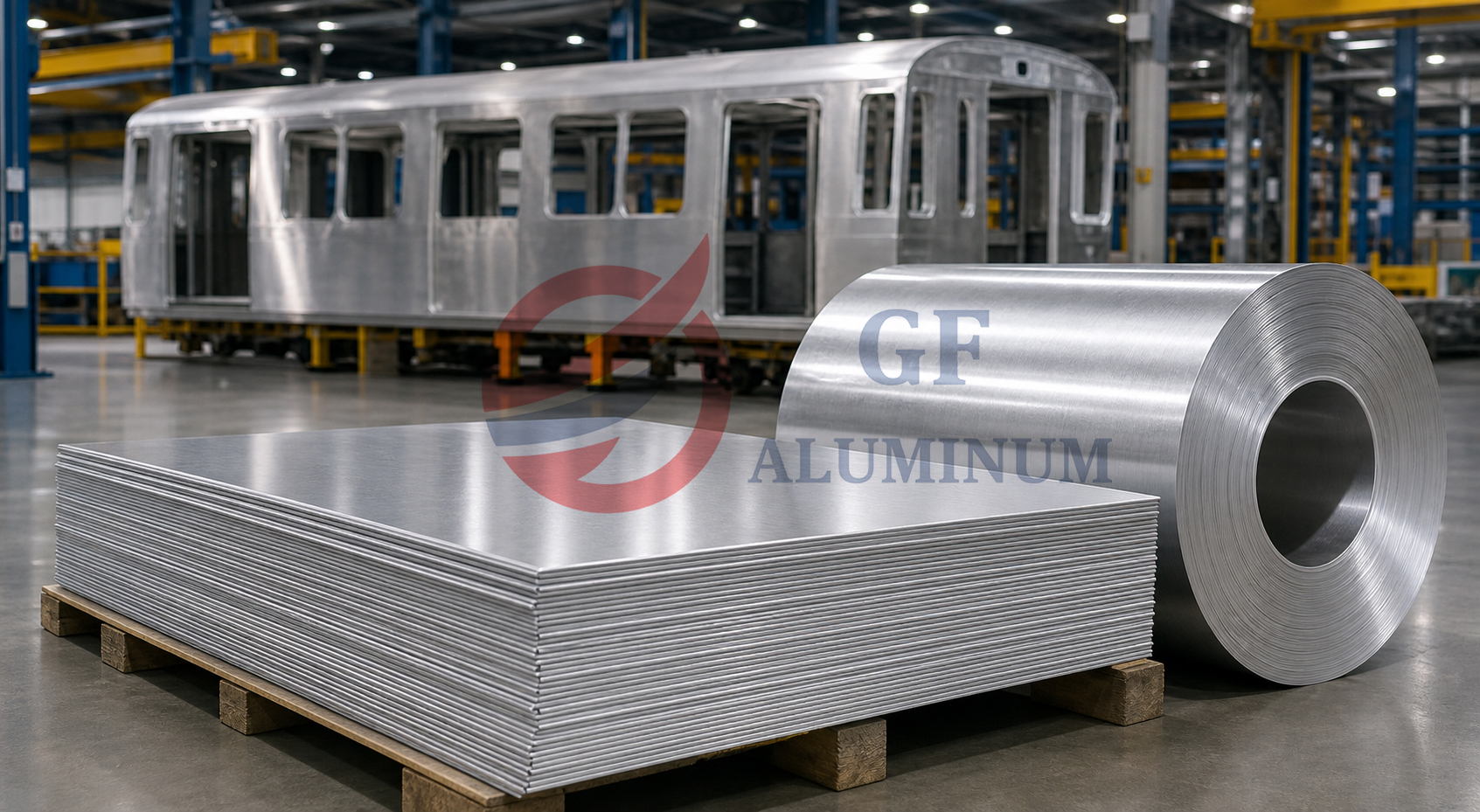
Aluminum Transportation Rail Transit Materials Overview
Aluminum transportation rail transit materials are used for rail vehicle sheet and coil applications where the material must be considered together with the part design and manufacturing process. Mill finish aluminum provides a flexible starting surface for forming, assembly and later surface treatment selected by the customer.
The product information identifies 3xxx, 5xxx and 6xxx series options. Typical grades include 3003 and 3004 in the 3xxx series, 5052 and 5754 in the 5xxx series, and 6016, 6061 and 6063 in the 6xxx series. The correct grade and temper depend on the intended component, forming requirements and project conditions.
| Product Type | Rail transit aluminum sheet and coil | Alloy Series | 3xxx, 5xxx and 6xxx |
|---|---|---|---|
| Typical Alloys | 3003, 3004, 5052, 5754, 6016, 6061 and 6063 | Temper | H temper, T temper or other temper as required |
| Thickness | Available upon request | Width | Custom widths supported |
| Supply Form | Sheet and coil | Surface Condition | Mill finish |
| Surface Treatment | Without coating or pre-treatment | Processing Basis | Forming, assembly and downstream treatment requirements |
| Typical Applications | Train body panels, interior structural parts, roof and sidewall components, door parts, floor structures and supports | ||
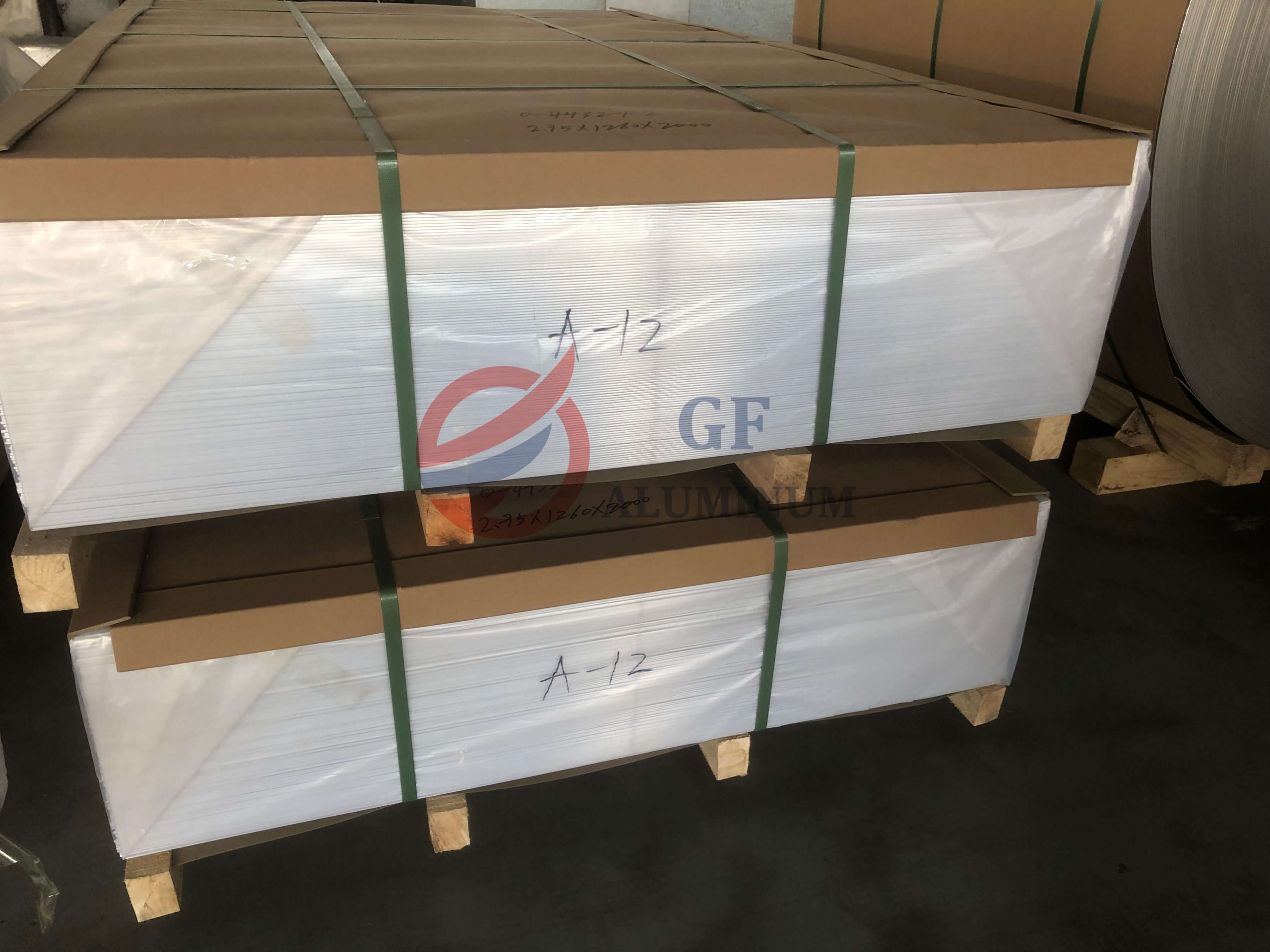
Aluminum Transportation Rail Transit Material Specifications
Final dimensions, grade and temper should be confirmed for the selected rail component and manufacturing route.
| Item | Available Information | Selection Note |
|---|---|---|
| Alloy Series | 3xxx, 5xxx and 6xxx | Select according to forming, structural and environmental requirements. |
| Typical Alloys | 3003, 3004, 5052, 5754, 6016, 6061 and 6063 | Confirm the exact grade before production. |
| Temper | H temper, T temper and other tempers depending on application | Temper should match the intended forming and component requirements. |
| Thickness Range | Available upon request | To be matched with the drawing, forming route and structural design. |
| Width Range | Custom widths supported | Width can be discussed for sheet-fed or coil-fed production. |
| Supply Form | Sheet and coil | Choose the form that suits the rail manufacturing line. |
| Surface Condition | Mill finish | Supplied without coating or surface pre-treatment. |
Choosing Aluminum Transportation Rail Transit Materials by Alloy Series
The correct alloy should be selected from the actual component geometry, forming sequence, environmental conditions and project specification.
3xxx Series
Typical grades include 3003 and 3004. This series can be evaluated for rail components requiring suitable formability and general processing performance.
5xxx Series
Typical grades include 5052 and 5754. Selection should consider the required forming behavior and the environmental conditions of the component.
6xxx Series
Typical grades include 6016, 6061 and 6063. The selected grade and temper should be checked against the structural and forming requirements.
Project-Based Choice
Alloy, temper, thickness and width should be confirmed together instead of applying one material choice to every rail transit component.
Practical Features of Aluminum Transportation Rail Transit Materials
These points summarize the material considerations stated for rail transit manufacturing. Final results depend on the selected grade, temper, dimensions and process.
Consistent Thickness
Consistent thickness supports more stable forming and assembly conditions when rail components are produced repeatedly.
Batch Uniformity
Uniform material behavior across coils and batches is an important consideration for continuous rail manufacturing programs.
Mill Finish Surface
The sheet and coil are supplied mill finish without coating or pre-treatment, leaving later surface processing open to the customer.
Forming Support
The listed material options can be evaluated for stamping, bending, forming and large-format rail sheet applications.
Corrosion Consideration
Alloy selection can include corrosion considerations for rail environments, subject to the selected material and project conditions.
Sheet and Coil Supply
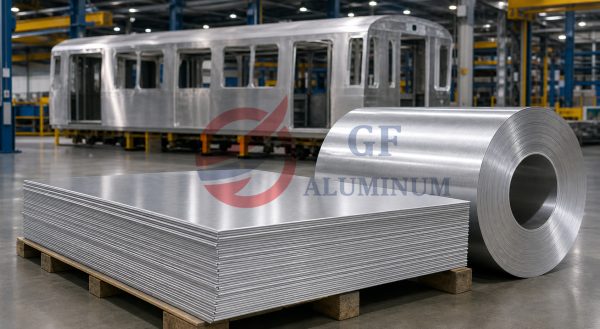
Both sheet and coil forms are identified, allowing the supply form to be matched with the intended production equipment.
Custom Widths
Custom width requirements can be discussed for large panels, blank development and continuous material handling.
Downstream Flexibility
Mill finish supply provides a flexible base for later forming, assembly, coating or other customer-selected treatment.
Rail Vehicle Applications for Aluminum Transportation Materials
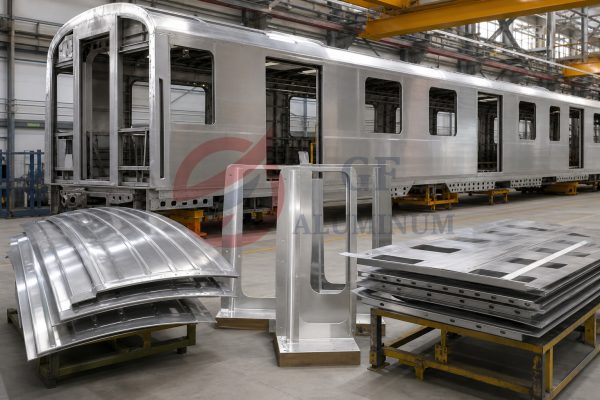
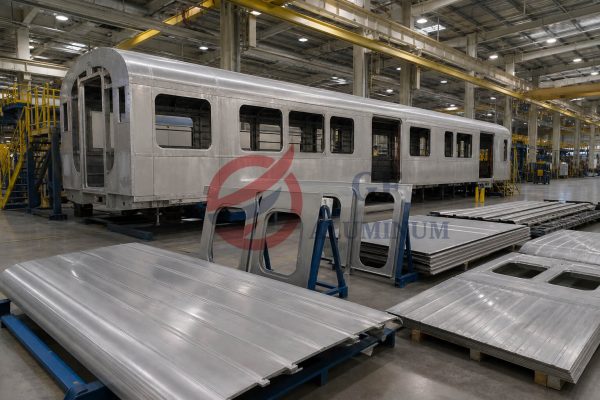
Aluminum transportation rail transit materials can be evaluated for body, interior and structural sheet applications according to the project design.
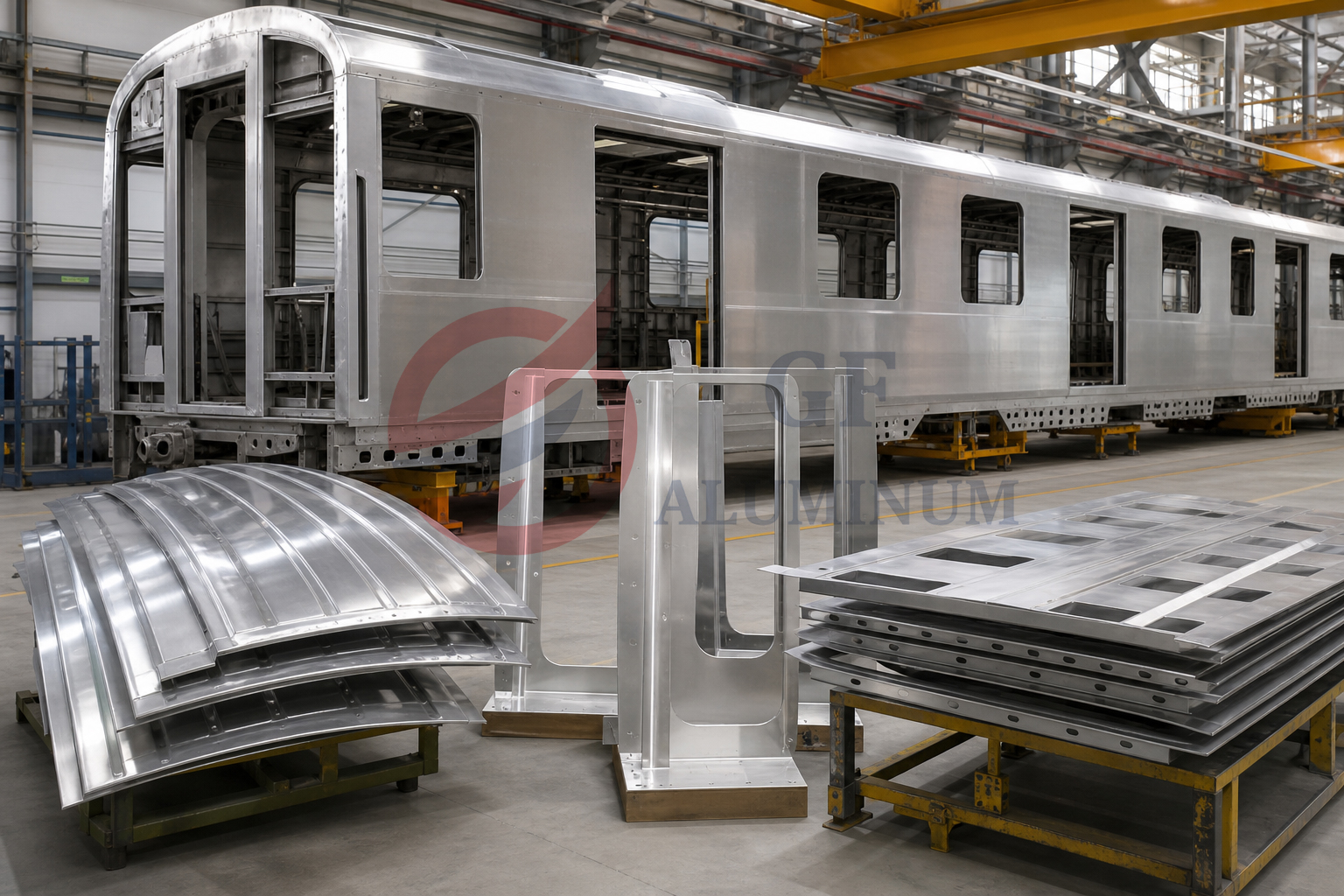
- Train Body Panels: exterior sheet components where weight, forming and dimensional requirements must be considered.
- Interior Structural Parts: interior components requiring suitable material selection and assembly accuracy.
- Roof and Sidewall Components: large-format parts that require appropriate forming and surface planning.
- Door and Access Parts: door panels, frames and related sheet components selected for the intended assembly.
- Floor and Support Structures: formed or assembled components evaluated according to the structural design.
- Rail Manufacturing Programs: sheet and coil materials planned for repeat production after the specification is confirmed.
Processing Options for Rail Transit Aluminum Sheet and Coil
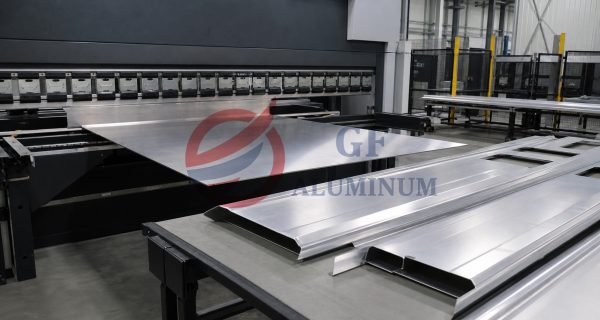
Aluminum transportation rail transit materials are supplied with a mill finish surface and can be evaluated for downstream manufacturing according to the component drawing. The actual process sequence depends on the selected alloy, temper, thickness, equipment and assembly method.
- Sheet or coil preparation for the selected production line
- Cutting or blanking before forming
- Stamping, bending and forming of rail vehicle panels
- Preparation of large-format sidewall, roof and body components
- Assembly and joining according to the customer process
- Cleaning, coating or other surface treatment after mill finish supply
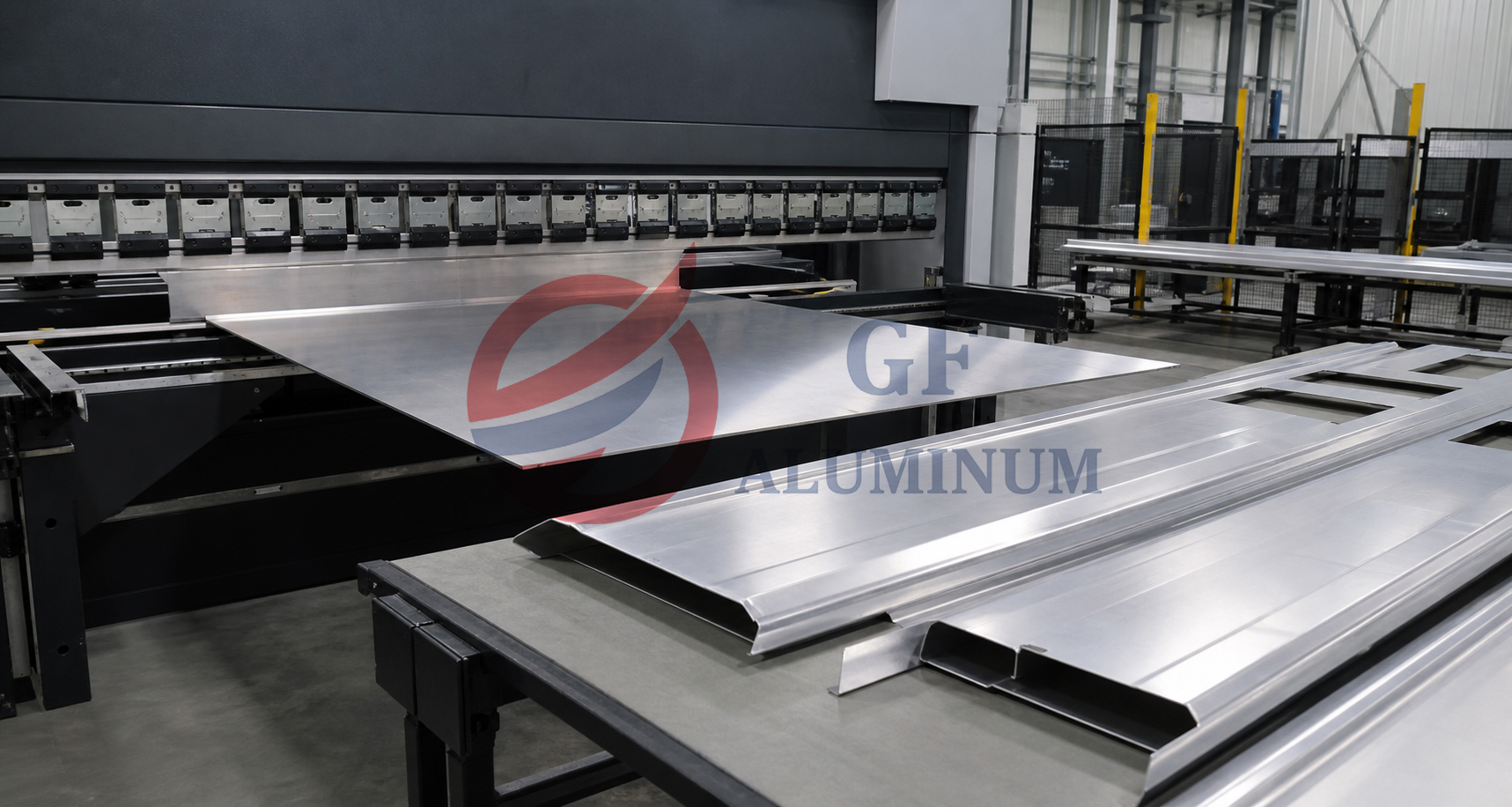
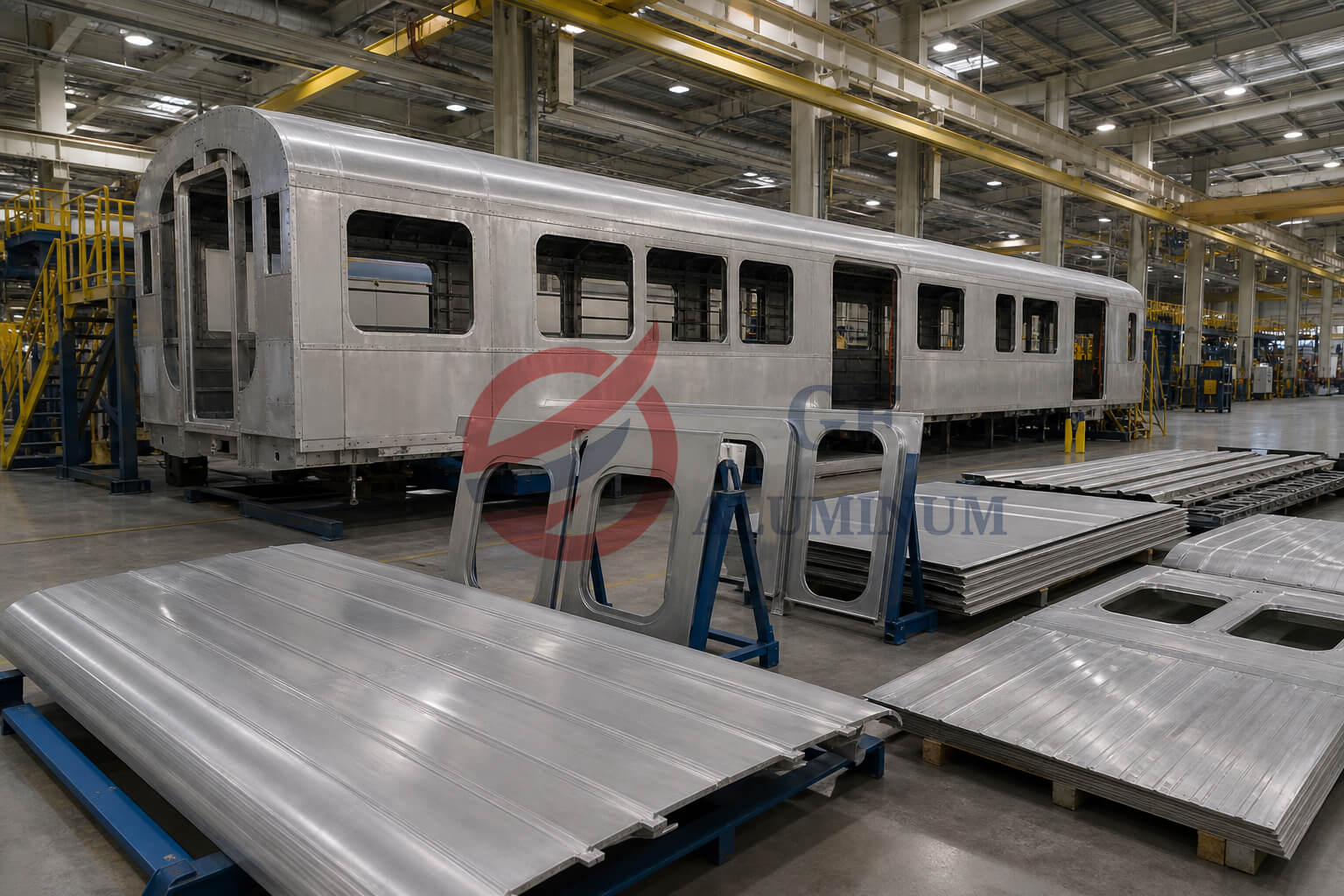
Mill Finish Sheet and Coil for Rail Transit Manufacturing
GF Aluminum supplies aluminum transportation rail transit materials as sheet and coil with a mill finish surface. The supplied condition is without coating or surface pre-treatment, allowing the customer to plan the required forming, assembly and finishing route for the rail component.
- 3xxx, 5xxx and 6xxx alloy series
- Typical grades include 3003, 3004, 5052, 5754, 6016, 6061 and 6063
- H temper, T temper and other tempers depending on application
- Sheet and coil supply forms
- Thickness available according to the selected specification
- Custom width requirements can be discussed